Walk into your favorite store, restaurant, or public building and you’ll immediately notice the polished design, soft lighting, and humming HVAC system. But rarely does anyone pause to appreciate what’s really keeping the place running: the electrical work hidden behind the walls.
It’s not flashy. It’s not meant to be. But it is absolutely essential.
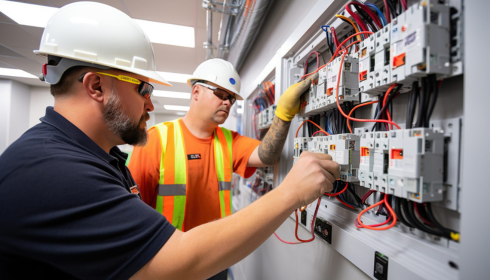
Commercial electrical work often flies under the radar — until something stops working. Yet behind every glowing sign, functioning POS system, and well-lit hallway is a team of electricians who meticulously planned, wired, and tested every circuit. It’s not just installation; it’s foresight, safety, and knowing how to make things work without a hitch.
Not Just Power, But Personality
Commercial electrical contractors don’t just provide power—they provide personality. Think about how your favorite shop feels. Warm lighting in the winter. Bright whites in the summer. Scented air pumps that sync with the seasons.
Now take Bath and Body Works electrical installations as an example. These spaces are designed to create a mood. The lighting has to complement product displays. Scent diffusers are strategically powered to flow throughout the room. Registers need to be flawlessly functional even during the holiday rush. Behind it all? A team that understands commercial branding and how electrical choices affect the customer experience.
It’s subtle, sure—but it’s critical. Without thoughtful electrical planning, even the most beautifully designed space falls flat.
Wiring for Heroes: Fire Station Projects
Now, flip the scene.
From spa-like retail to the high-alert, no-nonsense environment of a fire station—two different worlds, but the same need for precision and reliability.
Take the Miramar Beach Fire Station electrical project, for example. Unlike retail, fire stations demand absolute resilience. These are facilities where lives are literally on the line. The power can’t flicker. Systems can’t fail. Everything—from alert tones to garage bay doors, emergency lights to communication gear—must work flawlessly, even during power outages.
That’s where the real challenge comes in: integrating backup power, load prioritization, and robust control panels. There’s a reason electrical contractors with experience in civic projects are in high demand. This isn’t just about wiring a building; it’s about engineering reliability under pressure.
And let’s be honest—no one wants to be the reason a response time was delayed by a tripped circuit.
Small Spaces, Big Challenges
Sometimes it’s not the scale of the project that matters, but how tightly it has to be executed.
Take Panera Bread, for example. A quick-service restaurant might seem like a straightforward job, but it packs a punch when it comes to electrical planning. Ovens, mixers, refrigeration, digital menu boards, multiple POS terminals, security cameras, and even ambient music systems—all have to work in perfect sync.
A job like the Panera Bread Navarre electrical installation wasn’t just about getting power to the right places. It was about sequencing installations so contractors didn’t step on each other’s toes, keeping the job on time, and staying within code while still hitting design specs.
Oh, and did we mention most of these jobs happen in tight timelines with overlapping trades? Electricians often walk in while the tile guy’s finishing up and the HVAC crew’s mounting ducts. It’s a dance. And the ones who know how to move with the rhythm? They’re the ones who get asked back.
Why Good Electrical Work Never Gets Noticed (and That’s a Good Thing)
The best compliment an electrician can receive? “Everything just works.”
That’s the gold standard in commercial spaces. Customers shouldn’t notice the lighting—they should feel it. The AC should quietly hum along, outlets should be where you expect them, and switches should just make sense. It should all feel… effortless.
But to make something feel effortless takes work. Planning. Coordination. Inspections. Adjustments. And let’s not forget: code compliance in commercial builds is no joke. There’s no cutting corners when you’re dealing with safety, especially in spaces that welcome hundreds or thousands of people daily.
A Collaborative Craft
Electricians don’t work in a vacuum. They’re part of a bigger crew—GCs, architects, engineers, designers, plumbers, and HVAC specialists all have their own timelines and priorities.
The best electrical teams know how to speak everyone’s language. They show up when they say they will. They adjust their timelines without compromising quality. They read blueprints like novels and interpret designer visions into grounded, safe, and efficient systems.
They’re problem-solvers, not just installers. When a last-minute change throws off the plan, they adapt. When a designer wants a specific light fixture that wasn’t in the specs, they make it work without pushing the project over budget or off schedule.
That flexibility? It’s priceless.
Final Thoughts: Respect the Power You Don’t See
You might never see the breaker box behind the wall of your favorite bakery. Or the neatly labeled junction box in a fire station hallway. You may not realize the thought that went into every outlet or the hours spent inspecting wiring behind drop ceilings.