There’s something refreshing about a glass of water that tastes clean and doesn’t leave an unpleasant aftertaste. It sounds like a small thing, but when you’re drinking water throughout the day, preparing meals, or brewing your morning coffee, the difference can be quite noticeable.
Many homeowners are turning to reverse osmosis drinking water systems as a practical way to address unwanted dissolved substances and improve the quality of water used for drinking and cooking.
Unlike basic faucet filters, reverse osmosis uses a specialized membrane to separate water from various contaminants. It’s a technology that has become increasingly familiar in residential kitchens, and for understandable reasons.
But is it the right choice for every household? That depends on your water supply, daily requirements, and what you’re hoping to improve.
Understanding What Reverse Osmosis Actually Does
Reverse osmosis sounds rather technical, although the principle behind it is relatively straightforward.
The process uses water pressure to move water through a semipermeable membrane. This membrane allows water to pass through while rejecting many dissolved substances, which are carried away in a separate wastewater stream.
Most residential systems also incorporate preliminary filtration stages. These help capture sediment and reduce certain substances that could otherwise affect membrane performance.
Depending on the equipment’s verified capabilities, reverse osmosis can reduce various dissolved salts, nitrates, and certain metals.
However, no filtration system should automatically be assumed to remove every contaminant.
Knowing what’s present in your incoming water helps determine whether this treatment method is appropriate for your household.
Why Under-Sink Filtration Fits Naturally Into Modern Kitchens
Kitchen counter space is valuable. Between the coffee maker, toaster, and everything else that somehow finds its way onto the worktop, there isn’t always much room for additional equipment.
Installing under-sink reverse osmosis filtration offers homeowners a convenient way to access treated drinking water without taking up unnecessary countertop space.
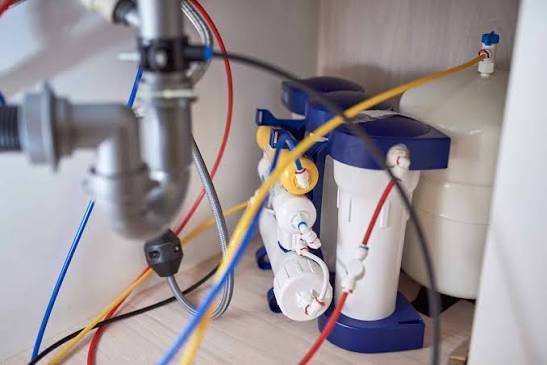
The equipment is generally positioned inside the cabinet beneath the kitchen sink, with treated water delivered through a dedicated faucet.
Some systems incorporate a storage tank, while others use tankless designs that produce treated water as needed.
Both arrangements have advantages and practical considerations.
Before installation, check available cabinet space, water pressure, drainage access, and maintenance requirements.
A well-planned installation should fit comfortably into your existing kitchen without making everyday activities more complicated.
How Modern Technology Is Improving Water Filtration
Water treatment equipment has changed considerably over the years. Today’s systems can incorporate features that make operation and maintenance more convenient.
Many products featuring advanced reverse osmosis technology offer improved membrane designs, filter replacement indicators, water efficiency features, and electronic monitoring, depending on the model.
Some tankless units also provide higher production rates than traditional compact systems, although actual performance depends on operating conditions.
These developments can be particularly useful for households that consume substantial amounts of drinking water throughout the day.
Still, impressive features shouldn’t overshadow the basics.
Look for verified contaminant reduction performance, reasonable operating costs, and readily available replacement components.
A dependable system that meets your requirements is often more valuable than expensive equipment loaded with functions you’ll rarely use.
Enjoying the Difference in Everyday Food and Drinks
Water is an ingredient in far more things than we sometimes realize.
It’s used to prepare soups, cook rice, brew tea, make coffee, and mix refreshing drinks during warmer weather.
When water has a noticeable mineral taste or unpleasant odor, those characteristics may influence the flavor of certain foods and beverages.
Appropriate filtration can help create a more neutral-tasting water supply.
Coffee enthusiasts, in particular, may appreciate greater control over water composition, although some mineral content can be desirable for flavor and extraction.
Having treated water readily available at the kitchen sink may also encourage household members to refill reusable bottles instead of purchasing packaged water. Related context: Better Water Begins at the Front Door: A Practical Guide to Whole-House Water Treatment.
It’s a simple convenience that can gradually become part of a family’s daily routine.
Is Reverse Osmosis Necessary for the Entire House?
For many homeowners, treating water specifically for drinking and cooking makes more practical sense than applying specialized membrane filtration throughout the property.
Whole-house reverse osmosis systems generally require greater capacity, additional equipment, and more extensive installation arrangements.
Meanwhile, water used for laundry, cleaning, and showering may not require the same level of treatment.
Properties experiencing widespread sediment or hardness problems might benefit from separate centralized filtration or softening equipment.
A dedicated kitchen system can then provide additional treatment for drinking water.
This combination allows homeowners to address different concerns without necessarily investing in unnecessarily intensive treatment for every household activity.
Understanding Maintenance and Long-Term Ownership
Reverse osmosis equipment requires regular maintenance to continue performing effectively.
Preliminary filters need periodic replacement, membranes eventually require servicing or replacement, and certain systems need occasional sanitization.
Replacement schedules depend on equipment design, incoming water quality, and consumption levels.
Water efficiency deserves attention, too. The filtration process produces a reject water stream, so comparing water recovery performance can be worthwhile.
Ask about replacement component costs before purchasing equipment.
Periodic testing may also be necessary, particularly when the system is intended to reduce potentially harmful contaminants.
A little routine attention can help preserve treatment performance and avoid unexpected expenses.
Making a Thoughtful Investment in Your Drinking Water
Choosing a drinking water filtration system doesn’t need to be overwhelming.
Begin with reliable water testing, compare equipment according to demonstrated performance, and select a system that fits your kitchen and household requirements.
With appropriate installation and consistent maintenance, reverse osmosis can offer a convenient approach to improving drinking water quality.
After all, some of life’s everyday pleasures are remarkably simple. A refreshing glass of water, a satisfying cup of coffee, or a homemade meal enjoyed with family. Better-tasting water can make those familiar moments just a little more enjoyable.